
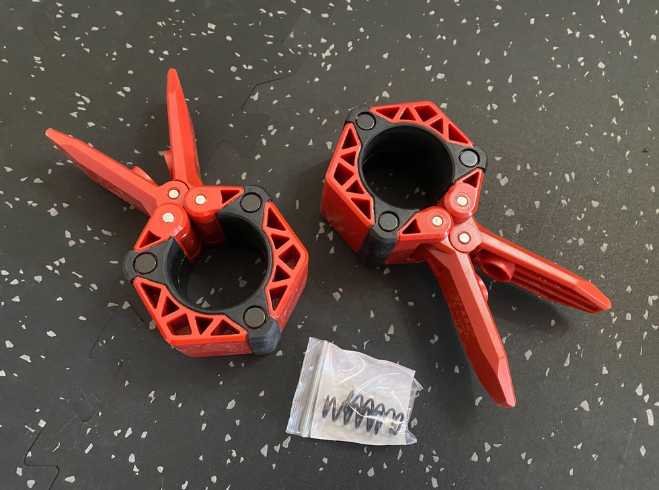
If you train regularly — especially in CrossFit, Olympic lifting, or heavy strength work — loose plates are more than an annoyance: they’re a safety hazard and a performance killer. But with so many barbell collars on the market, how do you pick one that matches your training style and priorities?
Here’s a simple, no-nonsense guide to help you choose the right collar for your gym needs.
Why Barbell Collars Matter
A good collar keeps plates locked in place so your barbell doesn’t shift during squats, snatches, cleans, or deadlifts.
Bad collars waste time, wear out equipment, and can even lead to injuries.
Your training style determines which features matter most.
Step 1: Know Your Training Style
Before buying, ask yourself:
Heavy strength training (powerlifting)
Lots of low-rep sets with heavy plates.Dynamic lifts (Olympic/CF)
Fast, explosive moves — snatches, cleans, jerks.Metcons / High-rep WODs
Quick bar changes, lots of sweat and tempo.Home gym or Garage gym
Limited space, one barbell to rule them all.
Your answers guide the features you’ll prioritize.
Step 2: Collar Types & How They Fit Your Style
Here’s how the main types stack up:
Spring Collars — Simple, Cheap, Universal
Best for: Beginners, light to moderate training, quick swaps.
Pros
Very affordable
Works on most standard bars
Easy on/off
Cons
Can loosen under heavy, explosive reps
Grip isn’t super strong
When to choose
✔ You’re new to lifting
✔ You pull lighter loads or train multiple people
Lever Collars / Speed Collar — Strong & Quick
Best for: CrossFitters and Olympic lifting.
Pros
Fast to open/close — ideal in WODs
Strong grip that doesn’t slip
Durable
Cons
Slightly bulkier than springs
A bit more expensive
When to choose
✔ You hit snatches, cleans, jerks, and high-tempo workouts
Screw / Clamp Collars — Heavy & Secure
Best for: Heavy strength work.
Pros
Extremely secure — great for low-rep maxes
Adjustable tension
Cons
Slower to use
Not ideal between quick bar changes
When to choose
✔ You focus on squats, deadlifts, benches with heavy loading
Step 3: Material Matters
Steel collars — extremely durable, best for heavy training.
Aluminum collars — lighter and sleek, still strong.
Plastic/Composite collars — cheaper and lighter, but less grip under load.
Rubber-coated collars — protects plates and floors, great for home gyms.
Tip: If you train on rubber floors and care about noise + plate protection, consider rubber-coated collars.
Speed vs Security — Pick Your Priority
| Style | Speed | Security | Best For |
|---|---|---|---|
| Spring | ⭐⭐⭐ | ⭐⭐ | Beginners / light lifting |
| Lever | ⭐⭐⭐⭐ | ⭐⭐⭐⭐ | CrossFit / Metcons |
| Screw | ⭐⭐ | ⭐⭐⭐⭐⭐ | Heavy strength |
Practical Buying Tips
✔ Check bar diameter compatibility (standard vs 2” Olympic sleeve)
✔ Look for positive locking mechanisms if you train explosively
✔ Test the opening/closing action — it should feel secure and fast
✔ Prefer collars with rust-resistant coatings if you train outdoors or sweat a lot
✔ If you share equipment, prioritize quick on/off collars
Final Takeaways
👉 If you do high-tempo lifts and WODs → lever collars/Speed Collar
👉 If you go heavy and slow → screw/clamp collars
👉 If you want cheap and easy → spring collars
Choosing the right barbell collar isn’t about the most expensive gear — it’s about matching the tool to how you train.